GOM-SCHEMA Cruise Log 2 – 04/27-28/15 (Zeima Kassahun)

DCIM999GOPRO

DCIM999GOPRO

On Monday, we found ourselves working above the infamous Halo shipwreck. We started the day with our 2nd CTD of the cruise. It was successful and we collected water from the bottom and the top of the water column. With the new peristaltic pump, filtration of the water was quick and painless. The filters used will be broken down and used to collect DNA from whatever we find living in the water around Halo.  Sediment collection using the multi-corer did not go as smoothly. We did not collect any sediment, but it was a good opportunity to learn about how to deploy the multi-corer.

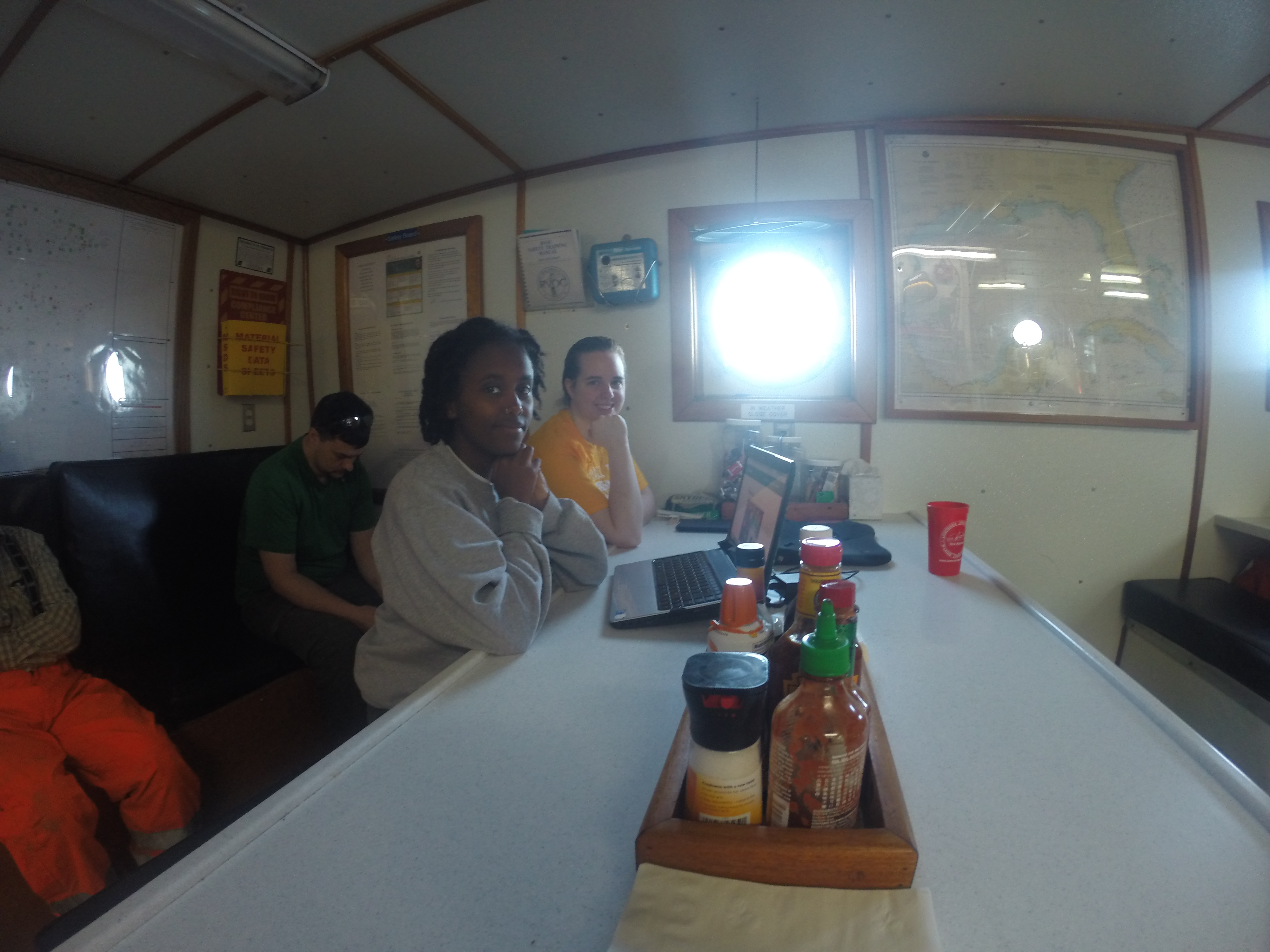
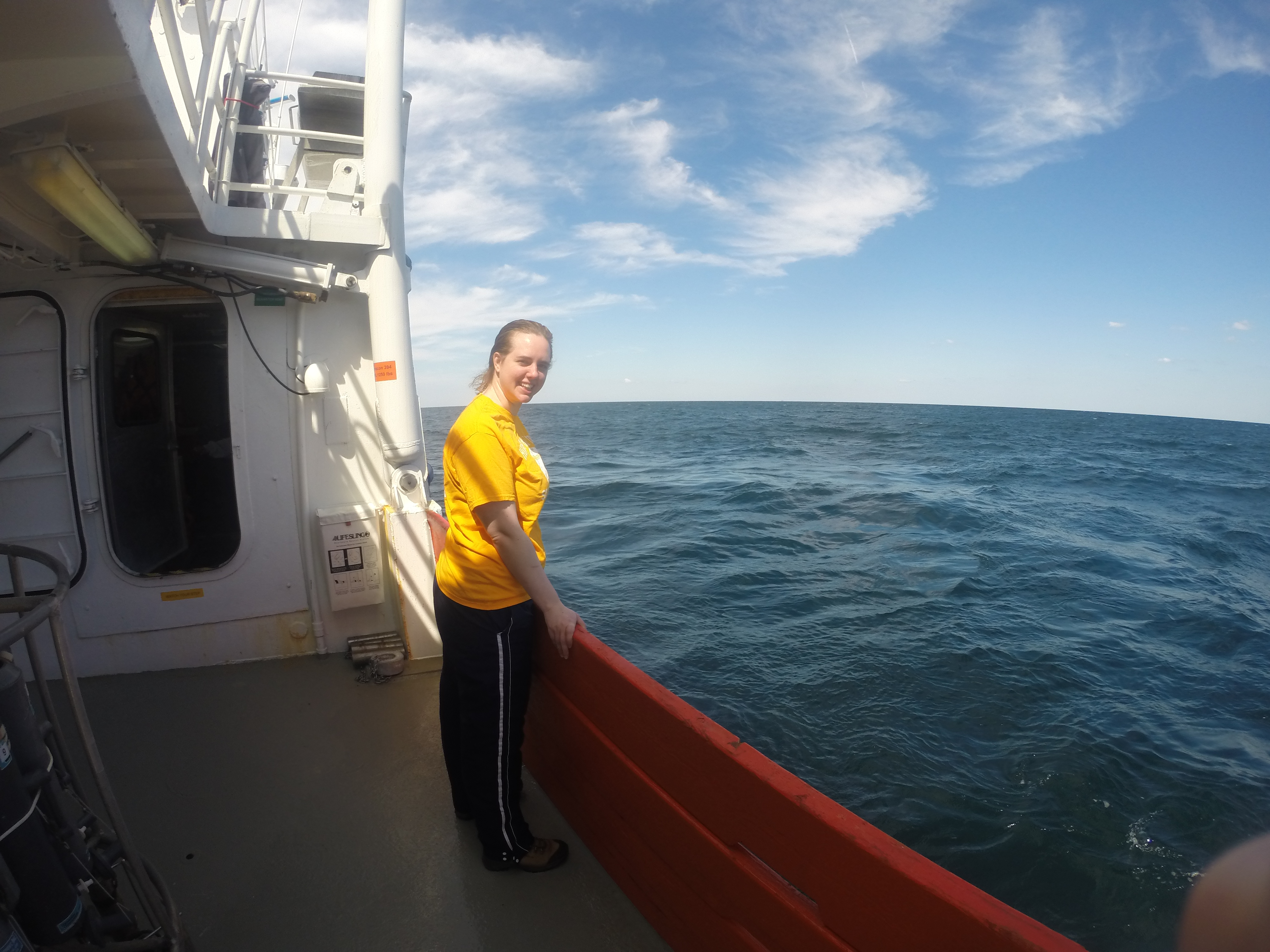
Unfortunately this was about the time the storm set in. The rest of the day the majority of us attempted to fight sea sickness and get some rest.  The next day [Tuesday] we all felt much better, even though the waves were still hitting us pretty hard.  Morale is high and we are ready to get things done! Regrettably this storm is still with us and we were only able to get the CTD deployed at the Ewing Bank shipwreck. Nevertheless we are all well rested and are prepared to do great work at our next site, the Viosca Knoll shipwreck.

Dr. Preston Fulmer from NRL is up next with a few words to say about the first two days of this cruise.  While at Halo [on Monday], we were able to get water samples for our research work.  The water samples we collected went into microtitre plates at varying media: inoculum ratios.  By mixing different media and the seawater samples collected at each shipwreck site, we’re hoping to find an environment favored by the deep-sea bacteria so that they may to be cultured in the lab.  Basically, we’re trying to grow the ungrowable!

We are also hoping to get samples from the sediment cores, but so far it has been a bust.  We had intentions of sending the multi-corer back down again, but the weather prevented us from doing so. Today [Tuesday], we were able to get CTD water samples from the next site, and again plate them in microtitre plates.  However, the seas are still too heavy to send down the multi-corer.  We are in transit to the next site and, hopefully, better weather.

GOM-SCHEMA Cruise Log 1 – 04/26/15 (Kate Blackwell)

DCIM999GOPRO

DCIM999GOPRO

The third research cruise of GOM-SCHEMA is underway! Funded and supported by the Bureau of Ocean Energy Management (BOEM), U.S. Naval Research Lab (NRL), and Bureau of Safety and Environmental Enforcement (BSEE), this project continues to investigate the impact from the 2010 Deepwater Horizon spill on several shipwreck sites and their associated microbial infauna and coral associated in fauna located in the Gulf of Mexico.  For more info, go here: http://www.boem.gov/GOM-SCHEMA/ or http://mbac.gmu.edu/mbac_wp/gulf_wrecks/. On this research cruise, we will be collecting additional aqueous and sediment samples from each of the shipwreck sites visited on the past two expeditions in March and July of 2014.

Throughout the afternoon, scientists arrived to board the R/V Pelican and began setting-up for the coming week out at sea. Scientists from George Mason University (GMU), Woods Hole Oceanographic Institution (WHOI), NRL, University of Texas Marine Science Institute (UTMSI), and American University (AU) will be conducting experiments and collecting data for ongoing research projects throughout the week. We’ll highlight each of them throughout the trip!

Our work could not be done without the support of the excellent R/V Pelican crew.  Capt. Nic Allen led us through a brief discussion and exercise on boat safety in the evening before we set-off. With training successfully completed, we were treated to a chocolate ganache and pecan double-layer cake. Who said food on a research cruise had to be bad?

On 8:00 PM (CST), the R/V Pelican set-out to her first destination! Before arriving at the Halo shipwreck site, we stopped briefly at a C6 site to deploy the Conductivity, Temperature and Depth (CTD) rosette. Fun fact, it used to be known as the Salinity, Temperature, and Depth analyzer, but that acronym….

Our trip’s Chief Scientist, Dr. Leila Hamdan will close today’s log with a few words. We have been planning the trip for months, and spent two days in port getting ready to sail. But ocean science relies on two very important things: weather and team work, two things you can’t plan for, but hope for the best of.