Some work stays with you because it makes visible what is usually hidden. Dr. Leila Hamdan’s TEDxSouthernMiss talk, Infinite Blue, does just that. It reminds us that the ocean is not just a backdrop or a resource, but a living world shaped by forces and relationships that often go unseen. In this piece, Dr. Leila Hamdan brings that view closer. TEDxSouthernMiss describes it as a journey from the ocean’s deepest darkness to its sparkling surface, blending science and poetry. Check it out below!
Author: karaedavis
A Century of Ocean Exploration: Returning to Hudson Canyon (LIVE!)
This week, the Hamdan Lab is thrilled to share news from the deep sea! From September 14-26, 2025, NOAA Fisheries, NOAA’s Office of National Marine Sanctuaries, and the Ocean Exploration Cooperative Institute are teaming up for an expedition in Hudson Canyon, the largest submarine canyon on the U.S. Atlantic coast. Using a remotely operated vehicle (ROV), scientists will livestream divers, collect samples, and share discoveries in real time. How to watch live ROV feed? Join us here to catch daily livestreams from September 15-24th, 8:00 am – 5:30 pm EDT (excluding weekends) and special “Ship-to-Shore” livestreams: September 17th, 19th, 23rd, and 25th.

Notably, this expedition also marks 100 years since the 1925 Arcturus Expedition, the first major voyage to study Hudson Canyon. The historic SS Arcturus expedition included six pioneering women scientists and artists who helped shape modern oceanography. Based on the findings of John Mahaffie, below is a break-away diagram view of the wooden steamer SS Arcturus refitted for oceanographic scientific exploration of “the graveyard of the Atlantic” in 1925.

Image: Based on information from NOAA/John B. Mahaffie
Below are historical snapshots of women that were integral to the 1925 Hudson Canyon expedition aboard the SS Arcturus. Interested in learning more about their scientific legacy? Get started here and here.
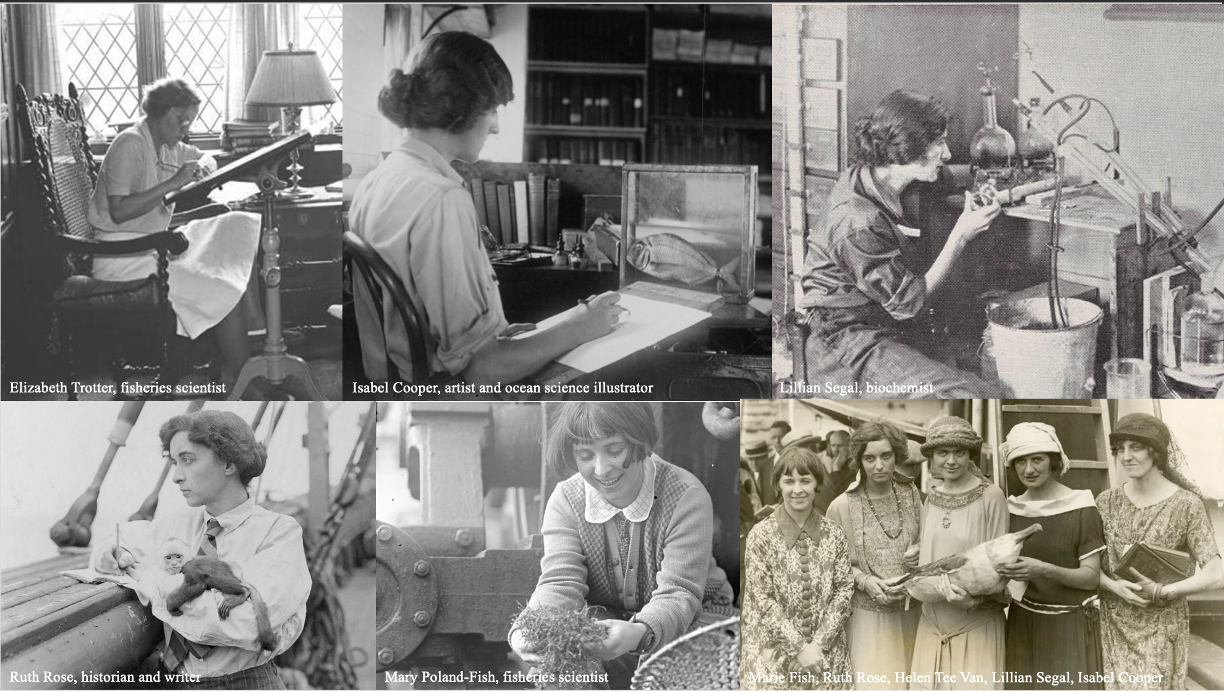
Imagery: NOAA/William B. Mahaffie
Hamdan Lab Hiring: Research Associate I
The Hamdan Lab at the University of Southern Mississippi studies how microbes shape and respond to the ocean environment. Our work spans the deep seafloor to the shoreline. We study microbial communities interacting with sediments, shipwrecks, aquaculture systems, and other natural and human-made features.
We are looking for a Research Associate I to join our team at the Gulf Coast Research Laboratory in Ocean Springs, Mississippi. This is a hands-on role in the lab and at sea, contributing to microbiome research that connects molecular biology, ecology, ocean science, and anthropology!
Interested? See the details and apply here: USM Job Posting – Research Associate I
Know someone who might be a great fit? Please share.
TEDxSouthern Miss: Join Us October 30 at the Gulf Park Campus
Mark your calendars! TEDxSouthern Miss is happening on October 30, 2025, at the University of Southern Mississippi’s Gulf Park Campus in Long Beach. We’re proud to announce that Dr. Leila Hamdan, will be among the featured speakers, bringing powerful insight into how the ocean’s smallest organisms shape our understanding of preservation, pollution, and progress in the deep sea.
Ready to attend?
In accordance with our TEDx license, only 100 people will be selected to attend in person. If you’re interested in attending, you must submit a lottery entry form by Saturday, September 7.
Register Here
Event Details:
Date: October 30, 2025
Location: USM Gulf Park Campus, Long Beach, MS
Livestream available for remote participation
How You Can Get Involved:
- Attend in person (register above)
- Host a livestream viewing party
- Sponsor the event – Sponsor Details
Meet All the Speakers:
Read the full press release: TEDxSouthern Miss 2025 Speakers
Let’s elevate Gulf Coast voices and ideas worth spreading!
Southern Miss Reflection 15 Years After Deepwater Horizon Oil Spill
On April 20, 2010, the Deepwater Horizon rig disaster released some 134 million gallons of oil into the Gulf of Mexico over 87 days, profoundly impacting coastal ecosystems from nearshore sands to deep benthic habitats. Just 11 days later, researchers at USM’s Gulf Coast Research Laboratory were in the field collecting water and sediment samples, deploying “Shoreline Sentinels,” and partnering with state agencies and local fishing communities through the COAST citizen‑science program. In the years since, sustained initiatives under the RESTORE Act and major research consortia like GoMRI have generated more than 75 peer‑reviewed studies on oil impacts, hypoxia, and microbial responses. Read the full retrospective on coastal health and restoration efforts here.
 HamdanLab